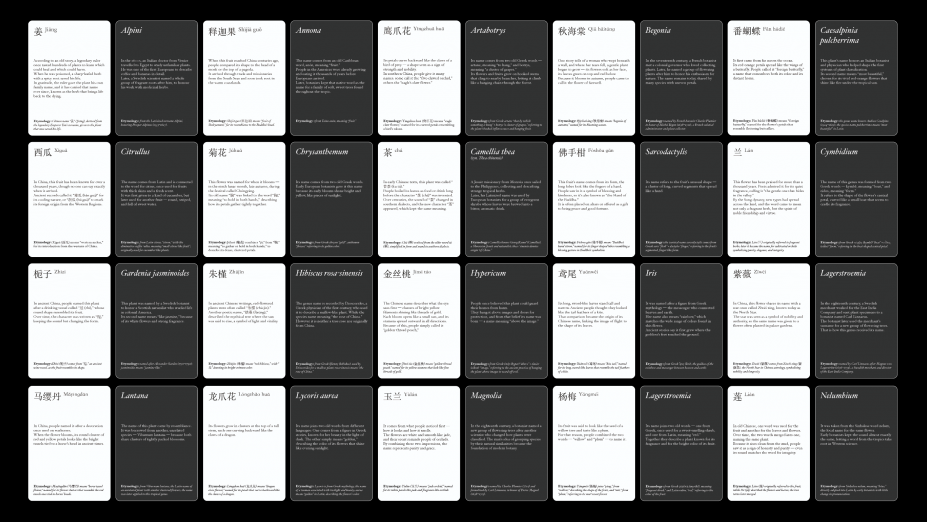
This written response refers to the final two paragraphs of Michel Foucault’s The Order of Things(1970, pp. xxiii–xxiv), beginning with “It is evident that the present study is…” and ending with “…it is the same ground that is once more stirring under our feet.”
These passages outline Foucault’s vision of knowledge as a series of epistemic thresholds, a structure that can itself be catalogued through time.
By re-cataloguing these moments through historical periods, it becomes possible to map how knowledge moves from resemblance, to representation, and finally to the unstable reflexivity of modernity. Each stage defines what can be known and how thought experiences its own limits.
The Renaissance represents a world organised by analogy and resemblance.
Foucault describes this as a period when language was part of the world it named, and knowing meant tracing visible and invisible correspondences. Meaning emerged from discovering affinities between signs and things—the body and the stars, plants and human temperament. The Renaissance episteme functioned like a web of mirrors: a world bound by resemblance where truth was resemblance itself.
The Classical Age (seventeenth–eighteenth centuries) marks the first rupture. Here, Foucault’s metaphor of the tabula or “table” signifies a new epistemic operation: the systematic ordering of differences. Knowledge becomes taxonomic, based on classification, measurement, and comparison. Language no longer belongs to nature but becomes a detached system of representation. In this era, the table replaces the mirror: an abstract grid that determines what can be seen and named, what is included and what is excluded.
The Modern Age, beginning in the nineteenth century, introduces what Foucault calls the “figure of man.” Knowledge turns reflexive; “man” becomes both the subject and object of inquiry, and thought begins to question its own foundations. Foucault describes this moment as “the threshold of a modernity that we have not yet left behind,” where the ground of knowledge starts to tremble. The human sciences arise on this unstable soil, defining the modern condition as one of perpetual reclassification.
Cataloguing the preface by these historical thresholds reveals how Foucault’s writing performs the very archaeology it describes.
His shifting metaphors, table, threshold, and ground, are conceptual operations that transform history into a taxonomy of thought. Through them, Foucault turns the history of knowledge into a catalogue of epistemic regimes, each ordering the world according to its own logic.
Reference
Foucault, M. (2001). The order of things. Taylor & Francis Group.
Leave a Reply