week 1
The first stage of my project began with the idea of investigation through method.
At that time, I was still exploring how observation could reveal relationships between perception and space.
My previous project, Methods of Investigating, had focused on sensory mapping — sound walks, visual sketches, and note-taking inside a small park.
From that experience, I learned that how we record the world already determines what kind of world we see.
When the new brief asked for Methods of Cataloguing, I decided to extend this idea from observation to classification.
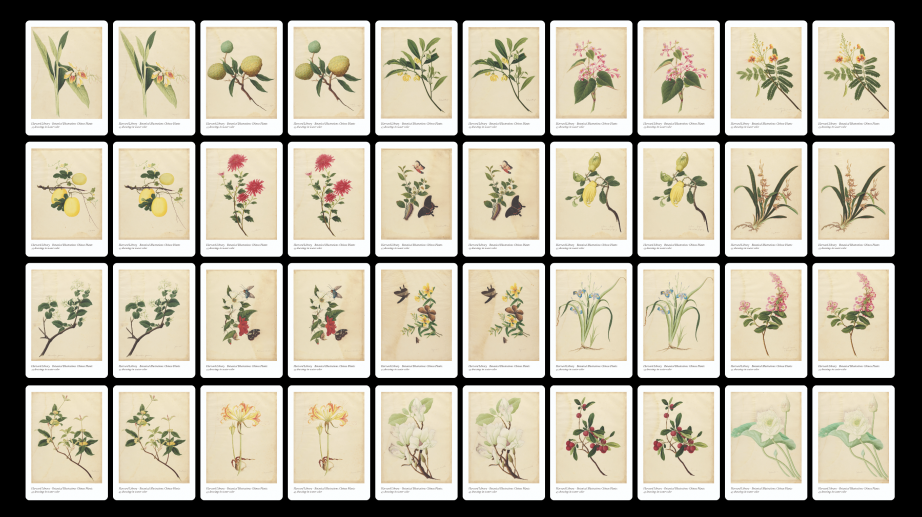
I selected the Harvard Botanical Illustrations of Chinese Plants as my dataset.
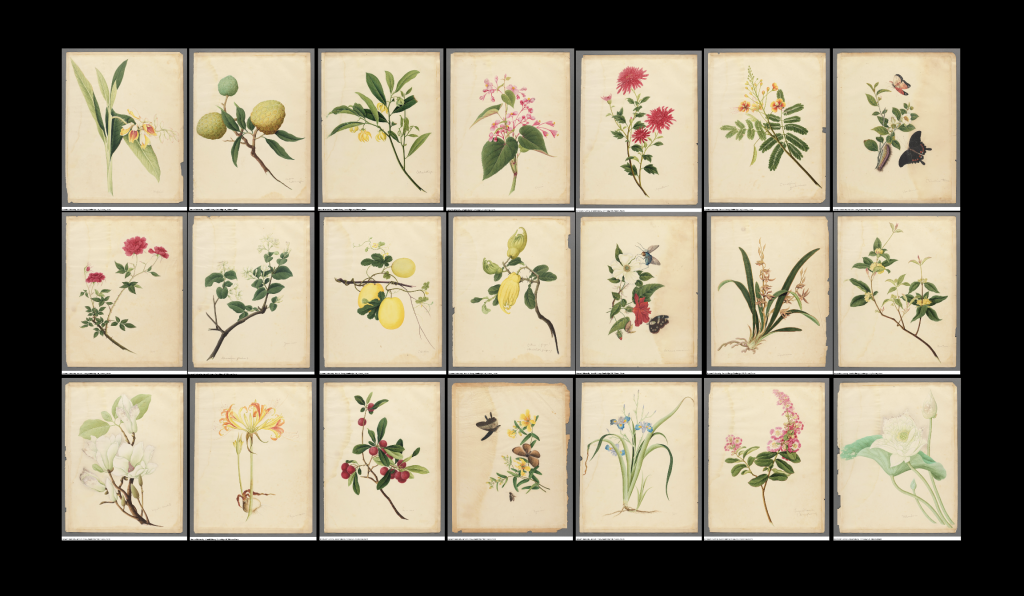
At first, I treated the collection as an archive to be reorganised — asking how different systems of order could reshape meaning.
This led me to develop three experimental catalogues:
- By Form, where plants were grouped by the shape of their fruits and physical structures;
- By Latin Roots, analysing the linguistic origins of scientific names; and
- By Time, classifying the plants according to their blooming and wilting seasons.
Each system revealed a different logic of knowledge.
However, they all remained descriptive — focusing on what plants are, rather than what naming does.
During the first critique, my tutor encouraged me to think beyond taxonomy, and to ask how language and power operate within systems of classification.
That feedback pushed me toward a new direction: to examine naming itself as a cultural act.
week 2
In the second stage, my project evolved from collecting to questioning.
After reading Foucault’s The Order of Things and Anderson’s Imagined Communities, I began to see cataloguing not as neutral documentation but as an expression of authority.
Foucault’s idea of the table of knowledge — the grid that decides what can be seen and named — made me realise that every catalogue hides a politics of visibility.
Anderson’s discussion of the census, map, and museum further showed how classification was used in colonial contexts to produce the illusion of order.
I applied these readings to my botanical study, shifting my focus from form to language systems.
The Latin binominal nomenclature, introduced by Linnaeus, reflects a universal scientific order: it defines and fixes.
In contrast, the Chinese naming system is imaginal — metaphorical, sensory, and poetic.
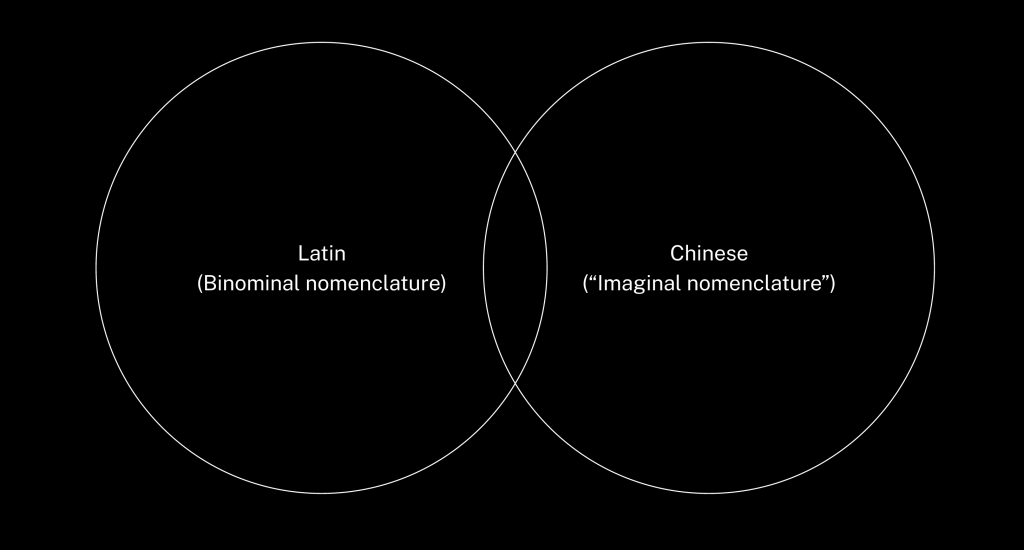
It reflects observation, story, and cultural symbolism.
I proposed the term “Imaginal Nomenclature” to describe this way of naming — a form of cataloguing through imagery and analogy rather than hierarchy.
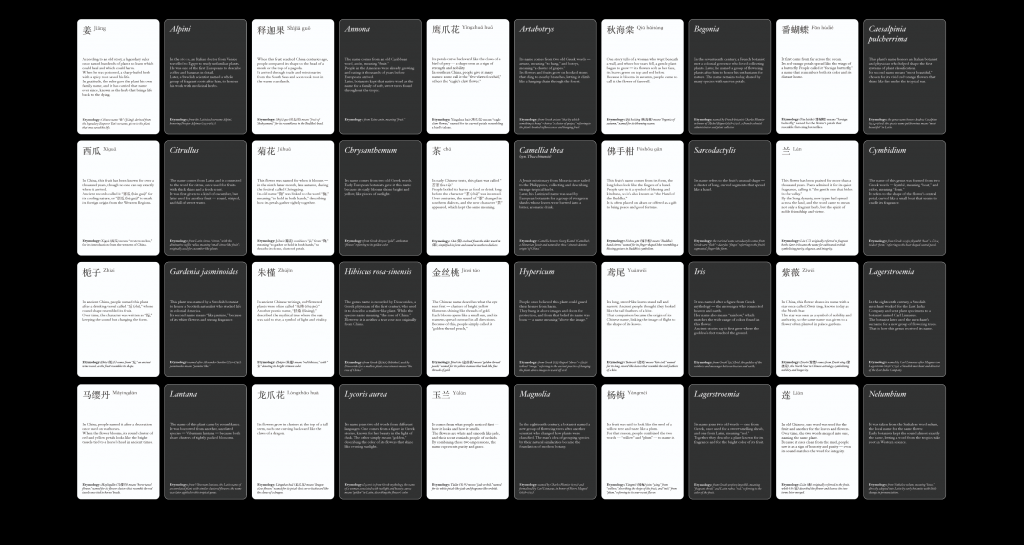
This led to my final outcome: an interactive card set.
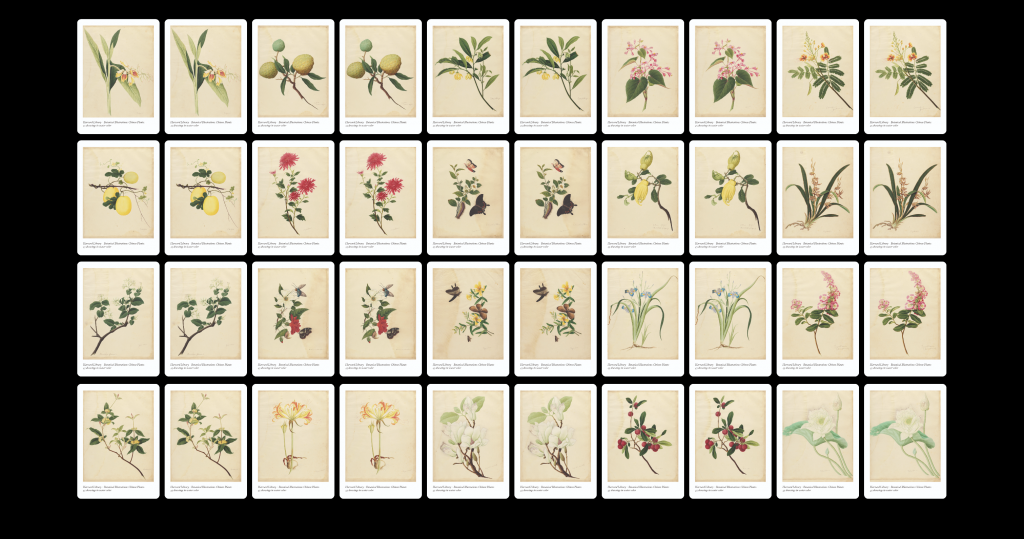
Each plant has two cards — one in Latin, one in Chinese.
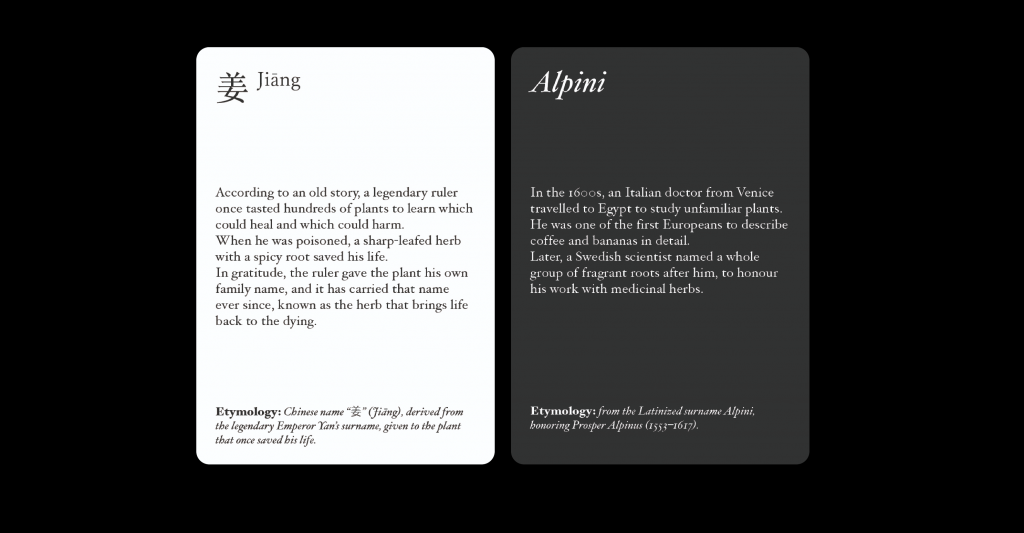
Both share the same botanical illustration on the back.
Players must match the Latin and Chinese cards, reading their etymologies and cultural stories to find connections.
In doing so, the act of cataloguing becomes playful and interpretive.
The project ends where it began — with curiosity — but now the focus is no longer on describing nature,
it is on how language constructs nature itself.
Leave a Reply