Written response 1
1. Walter Benjamin, ‘The Task of the Translator’
Illuminations, New York: Schocken Books, [1923] 1969, pp. 69–82. (Theme / subject matter)
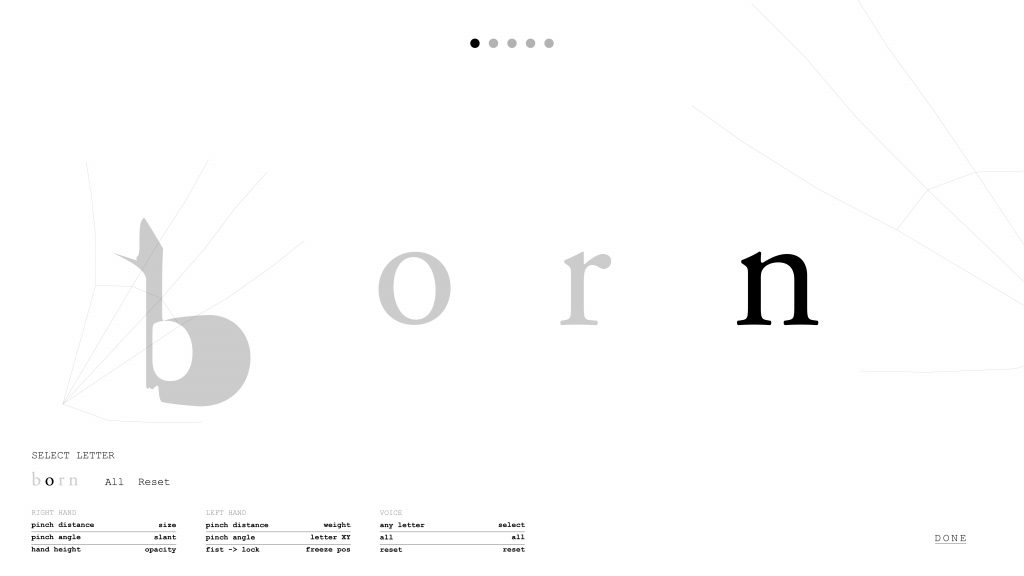
Benjamin argues that translation is not the transparent conveyance of meaning from one language into another but the survival of an original through a new body, and that the translator’s presence remains permanently inscribed in the result. There is no transmission without inflection. I take this position as the conceptual foundation of my project: each user of A Life in Type translates a fixed text into a typographic shape that no one else could produce, because no one else carries the same reading. The text remains the same; the body translating it changes. Benjamin gives me a way to defend the variability of the project’s outputs as integral rather than incidental — every poster is a legitimate version of the same source, the way every translation of a poem is a legitimate version of the poem. The subjective mark is the work.
2. Ed Fella, Letters on America
New York: Princeton Architectural Press, 2000. (Critical position)
Fella’s hand-lettered documentation of American vernacular signage proposes that a personal typographic language, developed entirely through one practitioner’s accumulated judgment, can constitute rigorous design rather than mere idiosyncrasy. He treats subjectivity as a discipline. This position underwrites a methodological decision in my project: the typographic vocabulary I give users — size, slant, weight, opacity, outline, dragging — is not constrained by external rules of legibility or hierarchy. There is no correct answer. Fella legitimises the move. He shows that a body of work governed by personal sensibility, accumulated and consistent, is not less serious than work governed by a system. Where Fella locates this rigour in the single practitioner, I extend it across many: each user is permitted to develop a brief, session-long typographic position of their own. The archive collects these as a plural version of what Fella does alone.
3. Raymond Queneau, Exercises in Style
London: John Calder, [1947] 1998. (Broader discourse)
Queneau retells the same banal Parisian bus incident ninety-nine times, each in a different literary register. The content never changes; the form changes everything. The book is the most concentrated demonstration I have found of the claim that formal variation is not decoration but meaning-making — that how a sentence is written determines what it does to a reader, even when the underlying event is identical. A Life in Type takes this proposition into typography. My eight keywords (born, cry, breathe, remember, laugh, love, lose, forget) are constants; the typographic settings change. Two users complete the same sentence with the same words and produce two readings that are functionally different texts. Queneau also gives me a structural argument for repetition as method: the meaning of the project emerges only across many versions of the same text, not from any single one. The archive is the work, not any poster within it.
4. Michael Rock, ‘Fuck Content’
Multiple Signatures: On Designers, Authors, Readers and Users, New York: Rizzoli, [1996] 2013, pp. 45–56. (Broader discourse)
Rock argues that graphic design’s content is not what it depicts but how it presents — form does not serve content, form iscontent. The polemic clears space for the central claim of my project: typographic parameters are not neutral carriers of a pre-existing message. What typography does to a word matters as much as what the word says. If ‘born’ is set at twelve hundred pixels and ‘forget’ at twelve, those decisions have written something the words alone could not. Rock’s essay is the most direct precedent for treating my four sliders as a writing instrument rather than a styling tool. Where I extend Rock is in handing this authorial power to the reader: if form is content, then anyone given control of the form becomes, briefly, an author of the content. The project tests whether Rock’s claim survives that redistribution of authorship.
5. Johanna Drucker, Diagrammatic Writing
Eindhoven: Onomatopee, 2013. (Medium / method)
Drucker’s artist’s book argues that the visual and spatial organisation of text is inseparable from its meaning, and demonstrates the argument on every page through her own layout. Format is not neutral. Each typographic decision — hierarchy, position, weight, alignment, white space — is not applied after the fact but is the primary site where meaning is made. This is the methodological cornerstone of A Life in Type. My project does not illustrate a reading of a text; it produces one through typographic decision. Drucker’s position lets me treat each slider adjustment as a writing act rather than a styling choice. Where my work pushes against hers is in authorship: Diagrammatic Writing is a single-author proposition, with Drucker controlling which spatial arrangements signify what. My project converts her diagrammatic logic into a participatory one, treating her book as a hypothesis to test rather than an argument to illustrate.
6. David Carson, The End of Print
London: Laurence King, 1995. (Wild card)
Carson’s monograph collects the editorial typography that established broken legibility as legitimate expressive practice. The book matters to my project not for any single layout but for the underlying claim it sustains across hundreds of pages: that the threshold of readability is meaningful territory, not a failure state. Carson treats illegibility as an editorial position. I take that proposition seriously, but I want to narrow it. Carson’s distortions are often generalised and provocative — a stance toward magazine design as a whole — while mine are tied to one specific reader’s response to one specific text. The distortion in A Life in Type is not a style; it is a record. The End of Print is the reference I am most cautious of, because its surface is so easy to inherit. The principle (illegibility can communicate) is what my project takes from Carson. The surface (the chaotic spread) is what it refuses.
7. David Carson, Ray Gun magazine
Santa Monica: Ray Gun Publishing, 1992–2000. (Wild card / primary practice)
Where The End of Print documents Carson’s editorial position, Ray Gun is the practice itself. The Bryan Ferry interview set in Zapf Dingbats remains the most-cited example: Carson found the interview dull, and the type became unreadable in protest. The example is often used to argue that Carson abandons communication. I read it the other way. He has not removed communication from the page — he has changed what is being communicated. The reader can no longer extract the words, but the page still transmits Carson’s reading of the words, his refusal of them, his attention to the relationship between content and its handler. This is the operating logic of my project. The typographic decisions in A Life in Type are not in the service of legibility; they are the user’s reading, made visible. Carson shows that typography keeps speaking when reading breaks down, and Ray Gun is the archive of that demonstration.
8. Rudolf Arnheim, Art and Visual Perception
Berkeley: University of California Press, [1954] 1974. (Course reading list / theory)
Arnheim’s Gestalt analysis of visual experience grounds ‘form is content’ in academic perception theory. Visual elements — line, weight, direction, balance — carry intrinsic expressive value before any semantic content is layered on top. A rising diagonal and a falling diagonal are not emotionally equivalent; a heavy form and a thin form do not produce the same response. Arnheim provides the theoretical legitimation my project needs at its most foundational level: the claim that typographic decisions are expressive before they are decorative is not a metaphor from design discourse but a defensible position from visual psychology. This matters when I present the project to readers who suspect that ‘felt typography’ is romantic language for arbitrary choice. Arnheim allows me to say that the differences a user produces between ‘love’ set heavy and ‘love’ set thin are not aesthetic preferences but perceptual events with measurable expressive content.
9. V. S. Ramachandran and E. M. Hubbard, ‘Synaesthesia: A Window Into Perception, Thought and Language’
Journal of Consciousness Studies, vol. 8, no. 12, 2001, pp. 3–34. (Course reading list / empirical)
Ramachandran and Hubbard’s bouba/kiki research demonstrates that ninety-five per cent of people, across languages and cultures, map the nonsense word ‘bouba’ to round shapes and ‘kiki’ to angular ones. The cross-modal correspondence between abstract form and perception is non-arbitrary, predictable, and empirically measurable. This finding does important work for my project: it converts ‘form is content’ from a critical-theory metaphor into a falsifiable claim about shared human perception. There is a substrate of common response to typographic form, even if individual readings vary. This complicates the project’s stance on subjectivity. My work assumes that each user’s reading is their own, but Ramachandran’s research suggests the readings will not be entirely disjoint — there will be regions of consensus visible in the archive. I want the work to hold both: typography produces shared perceptual responses and individuated emotional readings, and the difference between the two is part of what the project reveals.
10. John Cage, Notations
New York: Something Else Press, 1969. (Medium / precedent)
Cage compiled experimental musical scores from 269 contributors, each attempting to encode non-verbal information in visual form. The book is a primary archive of how others have already solved the problem my project takes on: how does visual organisation carry experiential meaning that text cannot? Some of Notations‘ contributions succeed and some collapse into private codes legible only to their author. The collection lets me see which solutions transferred and which did not, which moves recur across very different practitioners, and which kinds of notation depend on shared convention versus those that operate on raw perceptual response. Notations also models the structure of my archive: not a curated selection but a comprehensive collection that lets patterns and divergences become visible. Where Cage’s contributors are composers, mine are readers; where his notations encode sound, mine encode reading. The methodological logic is the same.
11. Method.ac, Kern Type: A Letter Spacing Game
Web-based interactive, https://type.method.ac, accessed May 2026. (Counter-reference / practice)
Kern Type is the project’s structural counter-reference. The game asks players to position letters within a word to find the kerning judged ‘correct’ by professional typographers, then scores the player against that solution. The interface is minimal — a single judgment, one task, one feedback loop — which my tutor identified as the design quality I should learn from. What I refuse, however, is the premise. Kern Type assumes a typographic correct answer exists and that the design challenge is to approximate it. A Life in Type assumes the opposite: there is no correct typographic decision for a word like ‘love’; the question is what each reader feels its correct setting to be. The two projects share an interface logic — direct manipulation of letterforms with immediate visual feedback — but argue opposite positions about authority. Kern Type makes type legible; my project makes it felt. The contrast clarifies what my work is doing.
12. Roland Barthes, via Michael Rock, ‘The Designer as Reader’
in Multiple Signatures: On Designers, Authors, Readers and Users, New York: Rizzoli, [1996] 2013. (Course reading list / theory)
Rock’s invocation of Barthes — that every reading is a projection, and a text’s meaning is always already shaped by who holds it — gives my project its central permission. The reader’s subjectivity is not a distortion of the text; it is the condition of reading. If this is true, then a typographic system that registers the reader’s subjective response is not adding noise to a clean signal — it is making visible what was always happening invisibly. Barthes/Rock allows me to defend the project against a likely critique: that handing typographic control to non-designers produces unreliable or undisciplined results. The response is that all reading is already that — every reader’s encounter with Charlie Gordon’s diary entry, or with the words ‘born’ and ‘forget’, is shaped by what that reader brings to the page. My project does not introduce subjectivity into reading; it gives subjectivity a form in which it can be seen.
written response 2
Essay One
Johanna Drucker, Diagrammatic Writing, Eindhoven: Onomatopee, 2013.
Drucker’s Diagrammatic Writing operates as both an artist’s book and a theoretical proposition. Across its pages, she demonstrates that the visual and spatial organisation of text is not a container for meaning but the place where meaning is produced. A heading is not the same statement as a footnote; a left-aligned line is not the same gesture as a centred one; a fragment trailing off into white space is not the same sentence as a fragment closed by a full stop. Format, Drucker insists, is never neutral. Writing is always already diagrammatic, and design decisions made about hierarchy, position, and weight are decisions made about argument and address.
This position is methodologically central to my project, A Life in Type. The brief began with a single question — should type be read, or felt? — and a refusal to treat that question as rhetorical. If form is content, as Michael Rock argues in ‘Fuck Content‘, then Drucker shows me where that argument is enacted: in the field of layout itself. The eight keywords I work with (born, cry, breathe, remember, laugh, love, lose, forget) are not illustrated by their typography; they are constituted by it. A user’s decision to enlarge forget to two thousand pixels, or to thin love until it becomes a hairline outline, does not decorate the word. It writes a new word, one that did not exist before that user existed.
What I take from Drucker is permission to treat each parameter as a writing tool rather than a styling tool. Size, slant, weight, and opacity become a vocabulary. Drucker’s book gives this vocabulary a theoretical home: she has already established that visual organisation produces semantic difference, so my project can enact it.
Where my work extends Drucker is in authorship. Diagrammatic Writing is a single-author proposition: Drucker decides which spatial arrangements signify what, and the reader receives a finished argument. My project hands those same decisions to the reader. The ‘writing’ is no longer the designer’s; the typography that emerges from a user’s session belongs to them. This shift converts Drucker’s diagrammatic logic into a participatory one. The page is a site of encounter, a Drucker-style proposition rendered as instrument.
This produces a productive tension I want to keep open in my final work. If meaning is genuinely made at the level of typographic decision, then giving the decision to the reader is the most rigorous test of Drucker’s claim. If the reader’s typographic choices are felt as meaningful — by them, by others reading them in the archive — then Diagrammatic Writing is not just a theoretical position but a falsifiable one. My project becomes, in this sense, a small experiment running on Drucker’s hypothesis.
Essay Two
David Carson, Ray Gun magazine (1992–2000).
Ray Gun ran for fewer than eight years, but the magazine produced the most-cited working demonstration of expressive typography in late twentieth-century editorial design. The position Carson developed across its pages is the one I return to most often in my own project: that typography keeps communicating after legibility breaks down, and that this excess — what the type does beyond delivering the words — is its primary material.
The example everyone reaches for is the Bryan Ferry interview set in Zapf Dingbats. Carson found the interview dull, set the entire piece in a symbol font, and let it run. The case is usually offered as evidence that Carson abandoned communication for provocation. I read it the other way. The page no longer lets the reader extract Ferry’s words, but it has not stopped speaking. It transmits Carson’s judgment of the interview, his refusal to dignify it, and the position from which the rest of the issue is being edited. The reader is told something the words could not have told them. The page is felt before it is parsed, and in this case only felt.
What makes Ray Gun productive for my own work is not any individual spread but the consistency of the editorial logic underneath them. Carson does not distort indiscriminately. Each layout responds specifically to what it is setting — a piece about a band’s exhaustion is broken down into fragments; a piece about euphoria is allowed to overflow its grid; an interview Carson respects is set legibly. The illegibility is judged. It is the record of a reading. This distinction matters because the easy critique of Carson — that he is stylising disorder — misses what the magazine actually does. Ray Gun is a typographic diary of one editor’s encounter with the material crossing his desk.
This is the principle I attempt to extend in A Life in Type. Where Carson is the single editor inscribing his reading into each spread, my project distributes that role across every user who passes through it. The eight keywords — born, cry, breathe, remember, laugh, love, lose, forget — are the fixed material; the typographic decisions belong to whoever is reading. Each completed sentence is a Ray Gun spread of one, made by someone who is not a designer, registering a reading the designer could never have anticipated.
What I must not inherit from Carson is the surface. Ray Gun‘s look has been imitated so frequently in the three decades since that the visual vocabulary has become unstable — illegible typography now reads as a stylistic choice before it reads as expressive choice. My project takes the principle (illegibility can carry meaning) and refuses the gesture (illegibility as a brand). The distortions in A Life in Type must belong to the user’s reading, not to the project’s style. Carson’s lesson, taken seriously, requires that.
Leave a Reply